


-
Bensham Lane, Thornton Heath
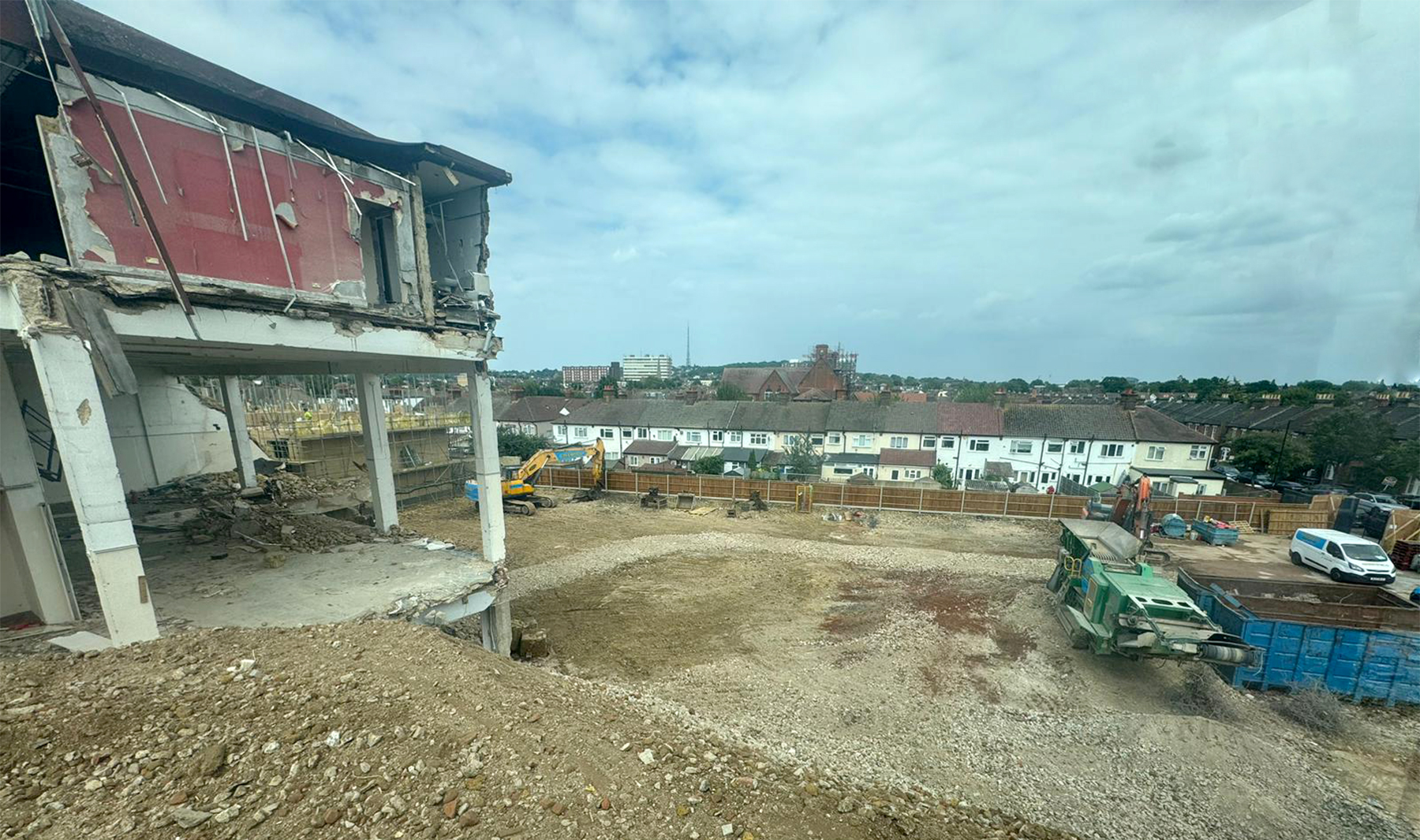
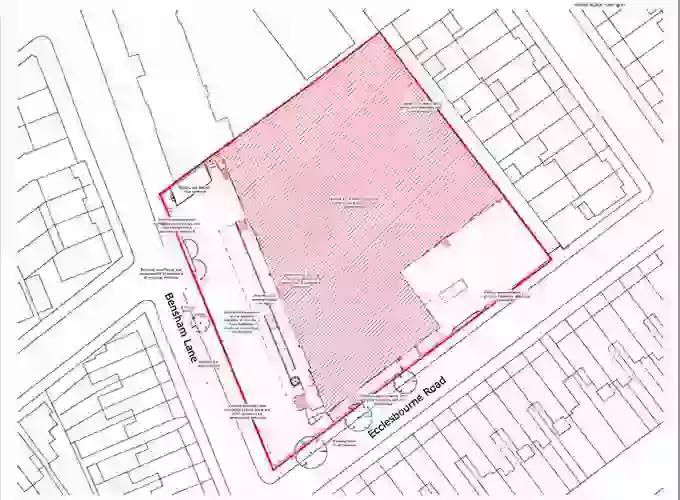
Greenfield Demolition were appointed by a returning client to deliver the controlled demolition of Lynton’s House, a mixed-use office and warehouse building located on Bensham Lane, Thornton Heath.
The project involved the removal of a substantial structure within a constrained urban environment, bordered by neighbouring properties and an adjacent new-build development.

6505 Man Hours

3982.52 Tonnes

26 Weeks
Bensham Lane, Thornton Heath
Greenfield Demolition were appointed by a returning client to deliver the controlled demolition of Lynton’s House, a mixed-use office and warehouse building located on Bensham Lane, Thornton Heath.
The project involved the removal of a substantial structure within a constrained urban environment, bordered by neighbouring properties and an adjacent new-build development.
6505 Man Hours
3982.52 Tonnes
26 Weeks
-
Scope of Works
- Pre-Demolition Waste Audit
- Section 80/81 Notice
- Licensed and Non-Licensed Asbestos
- Demolition Specification Scaffold
- Soft Strip of all Buildings
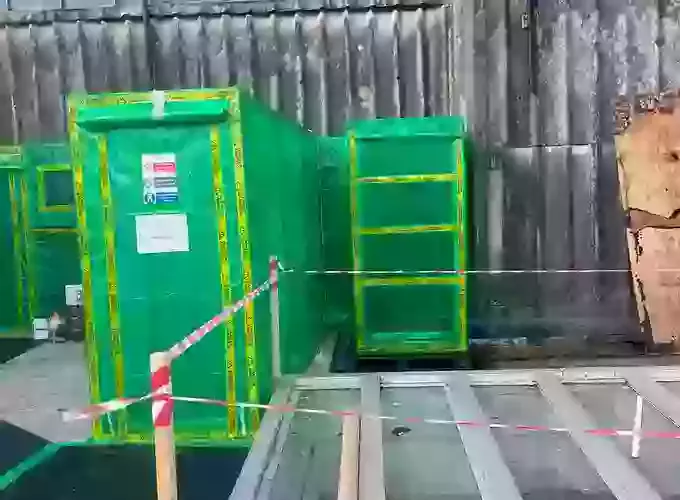
- Removal of a large oil tank and its contents
- Demolition of the Office and Warehouse Building
- Demolition of the chimney stack
- Hand Demolition along party walls
- Temporary Debris Screen Along Party Wall Boundaries
- Crush all arisings to 6F2 for reuse
Scope of Works
- Pre-Demolition Waste Audit
- Section 80/81 Notice
- Licensed and Non-Licensed Asbestos
- Demolition Specification Scaffold
- Soft Strip of all Buildings
- Removal of a large oil tank and its contents
- Demolition of the Office and Warehouse Building
- Demolition of the chimney stack
- Hand Demolition along party walls
- Temporary Debris Screen Along Party Wall Boundaries
- Crush all arisings to 6F2 for reuse
-
Project Overview
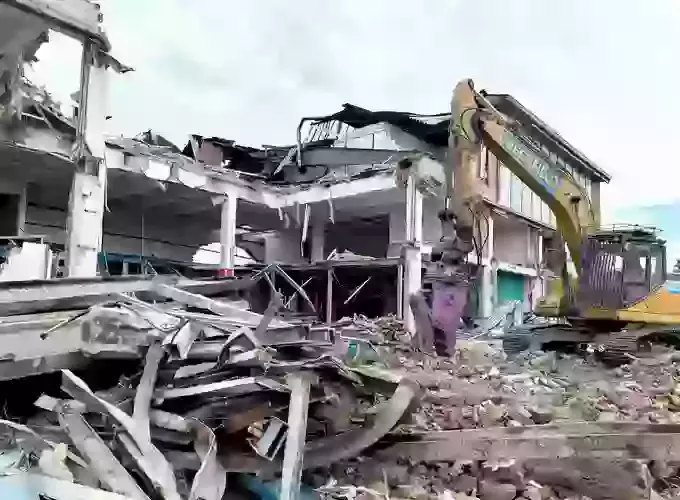
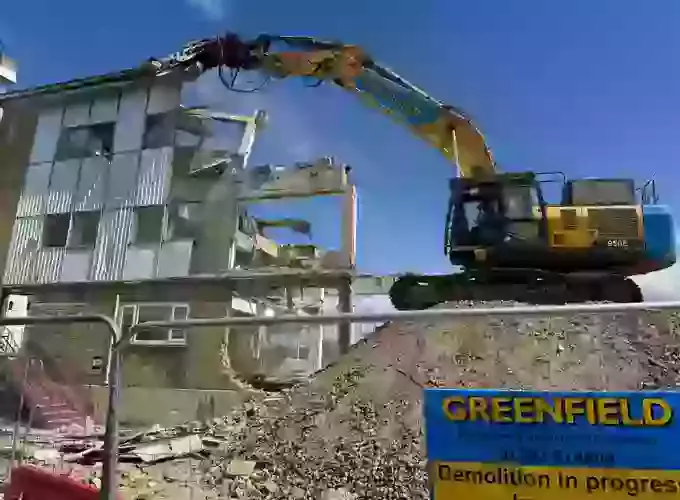
The building comprised office accommodation and warehouse space, extending to approximately 3,600m² with an overall height of 15 metres. To the rear of the site stood a 20-metre-high tin-clad chimney, which required careful sequencing and controlled dismantling.
The site was located in a sensitive area, with party walls adjoining neighbouring properties and an active new-build development immediately adjacent. These constraints required detailed planning, close coordination, and robust protective measures throughout the demolition process.
Project Overview
The building comprised office accommodation and warehouse space, extending to approximately 3,600m² with an overall height of 15 metres. To the rear of the site stood a 20-metre-high tin-clad chimney, which required careful sequencing and controlled dismantling.
The site was located in a sensitive area, with party walls adjoining neighbouring properties and an active new-build development immediately adjacent. These constraints required detailed planning, close coordination, and robust protective measures throughout the demolition process.
-
Challenges
The project had multiple challenges to consider, such as:
- Close proximity to neighbouring residential and commercial properties
- Shared party walls requiring controlled hand demolition
- An active new-build development adjacent to the site
- The presence of contaminants, including asbestos and an unknown liquid within a basement oil tank
Challenges
The project had multiple challenges to consider, such as:
- Close proximity to neighbouring residential and commercial properties
- Shared party walls requiring controlled hand demolition
- An active new-build development adjacent to the site
- The presence of contaminants, including asbestos and an unknown liquid within a basement oil tank
-
Solutions
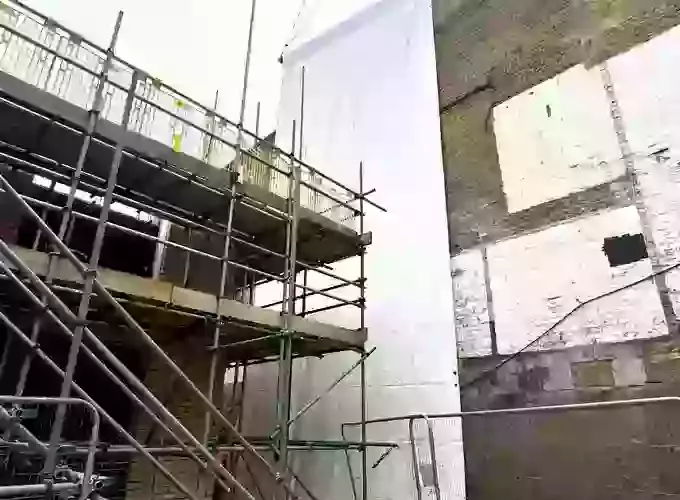
To mitigate risks associated with the party walls and surrounding properties, Greenfield Demolition’s technical team designed and installed a bespoke debris screen system. This system provided full protection to neighbouring buildings throughout the demolition works. Due to site constraints, the debris netting was installed using a crane and remained in situ for the duration of the boundary wall demolition, enabling safe removal down to ground level.
Within the basement, an existing oil tank was found to contain an unknown substance. Greenfield worked closely with a specialist local supplier to sample and analyse the contents. The material was identified as a heavy fuel oil requiring temperature control to remain in a liquid state. A heated tanker was mobilised to site, allowing the safe extraction and removal of the oil, which was transported to a licensed waste facility for refinement.
All works were carefully planned and executed to ensure safety, programme certainty, and minimal disruption to neighbouring stakeholders.
Solutions
To mitigate risks associated with the party walls and surrounding properties, Greenfield Demolition’s technical team designed and installed a bespoke debris screen system. This system provided full protection to neighbouring buildings throughout the demolition works. Due to site constraints, the debris netting was installed using a crane and remained in situ for the duration of the boundary wall demolition, enabling safe removal down to ground level.
Within the basement, an existing oil tank was found to contain an unknown substance. Greenfield worked closely with a specialist local supplier to sample and analyse the contents. The material was identified as a heavy fuel oil requiring temperature control to remain in a liquid state. A heated tanker was mobilised to site, allowing the safe extraction and removal of the oil, which was transported to a licensed waste facility for refinement.
All works were carefully planned and executed to ensure safety, programme certainty, and minimal disruption to neighbouring stakeholders.
-
Waste Report
Greenfield Demolition achieved a 98% recycling rate across all materials removed from site, including:
- Mixed construction and demolition waste
- Wood waste
- Metals
- Non-recyclable waste
- Asbestos waste
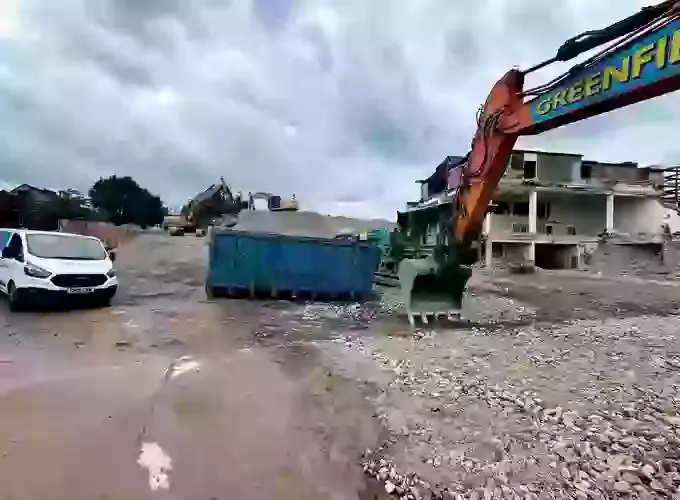
All concrete and hardcore arisings were crushed on site to a 6F2 specification and stockpiled for reuse during the subsequent development phase, reducing vehicle movements and minimising environmental impact.
Waste Report
Greenfield Demolition achieved a 98% recycling rate across all materials removed from site, including:
- Mixed construction and demolition waste
- Wood waste
- Metals
- Non-recyclable waste
- Asbestos waste
All concrete and hardcore arisings were crushed on site to a 6F2 specification and stockpiled for reuse during the subsequent development phase, reducing vehicle movements and minimising environmental impact.
-
Project Outcomes
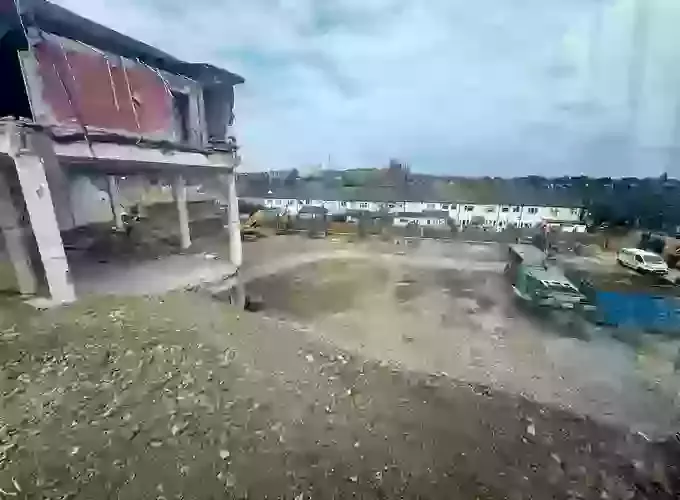
The Bensham Lane project demonstrated Greenfield Demolition’s capability to deliver complex demolition works within constrained urban environments. Through detailed planning, innovative protective solutions, and a strong commitment to environmental performance, the project was completed safely, efficiently, and in line with the client’s objectives.
Project Outcomes
The Bensham Lane project demonstrated Greenfield Demolition’s capability to deliver complex demolition works within constrained urban environments. Through detailed planning, innovative protective solutions, and a strong commitment to environmental performance, the project was completed safely, efficiently, and in line with the client’s objectives.
Services
Demolition

Asbestos Removal