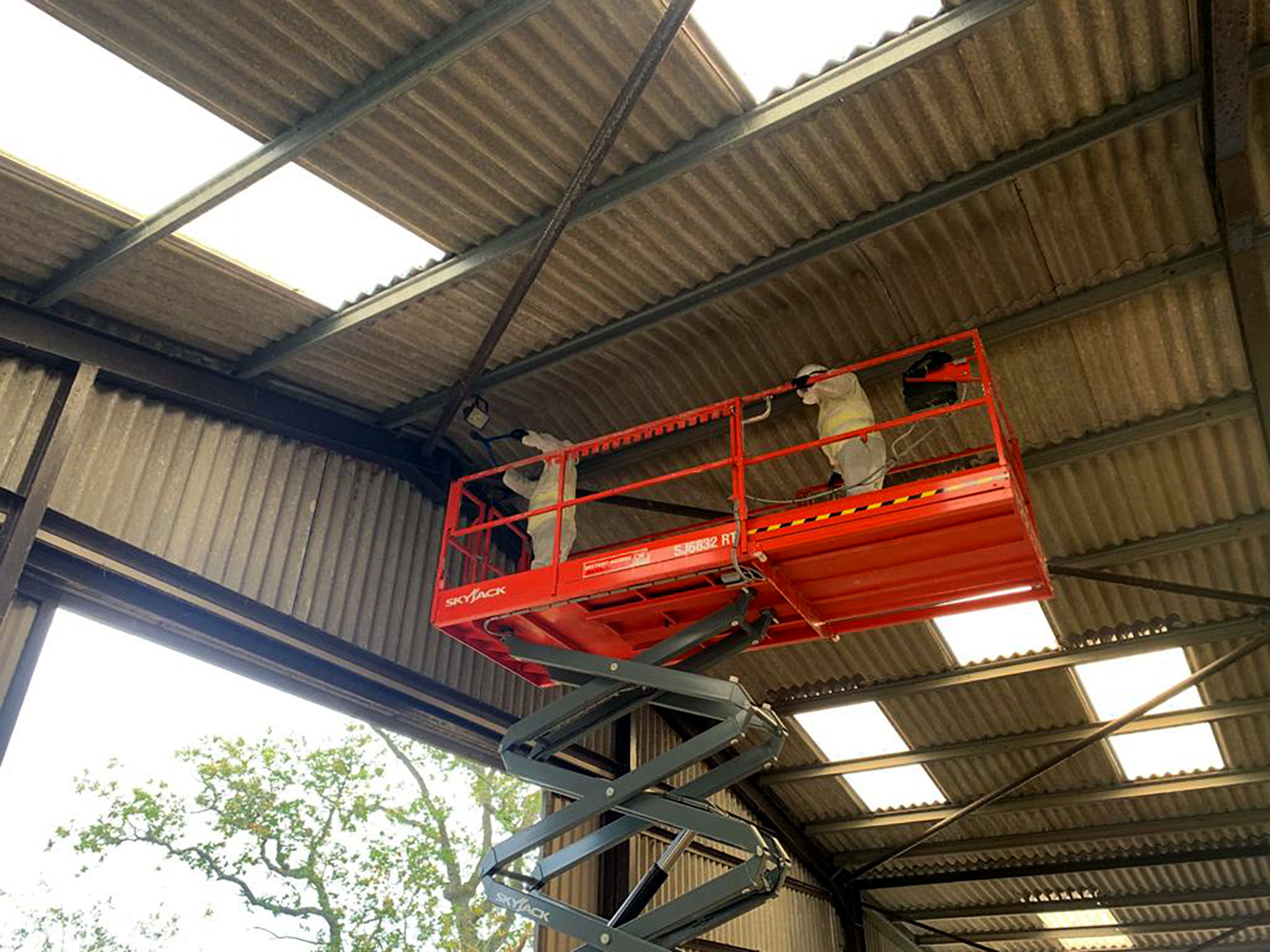

Asbestos in Demolition: Understanding the Risk and Managing It Properly

Few materials have shaped the demolition industry — or its health legacy — quite like asbestos.
Despite being banned over two decades ago, asbestos remains one of the most significant occupational health risks facing demolition contractors today. Managing it correctly is not optional. It requires technical competence, strong leadership and a culture that prioritises long-term health over short-term programme pressure.
At Greenfield Demolition, we treat asbestos not as a historical issue, but as a current operational reality. Managing it properly requires knowledge, training, vigilance and leadership at every level of the business.
This article outlines what asbestos is, why it was used so extensively, the key risks it presents during demolition, and the measures we implement to control exposure throughout the demolition process.
What Is Asbestos?
Asbestos is a naturally occurring fibrous mineral that was widely used in construction materials due to its:
- Fire resistance
- Thermal insulation properties
- Chemical resistance
- Strength and durability
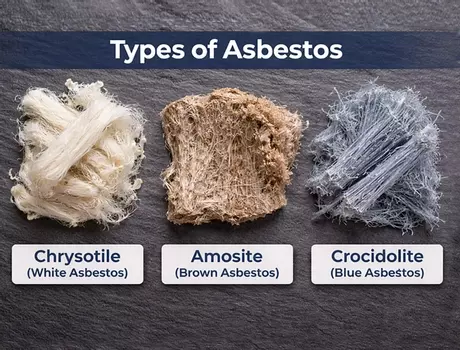
There are several types of asbestos, but the three most commonly encountered in UK buildings are:
- Chrysotile (white asbestos) – commonly found in cement products, floor tiles, textured coatings
- Amosite (brown asbestos) – frequently used in asbestos insulating board (AIB)
- Crocidolite (blue asbestos) – often used in sprayed coatings and pipe insulation
Asbestos was incorporated into thousands of building products, including:
- Insulation boards
- Pipe lagging
- Ceiling tiles
- Sprayed fire protection
- Roofing sheets
- Floor coverings
- Bituminous products
Although banned in the UK in 1999, asbestos-containing materials (ACMs) remain in many buildings constructed or refurbished before 2000.
The Historical Context
Between the 1950s and 1980s, asbestos use in UK construction was extensive. It was often considered a “miracle material” because of its fire-resistant properties and cost-effectiveness.
Unfortunately, the long-term health implications were not fully understood or acknowledged until significant harm had already occurred.
By the late 20th century, clear links had been established between asbestos exposure and serious diseases, including:
- Mesothelioma
- Asbestosis
- Lung cancer
- Pleural thickening.
These illnesses are typically characterised by long latency periods. Symptoms may not appear for 20–40 years after exposure.
As demolition contractors, we often work on buildings constructed during the peak period of asbestos use. This means asbestos risk remains highly relevant to our daily operations.
Why Asbestos Presents a Unique Risk in Demolition
In occupied buildings, asbestos can often be managed in situ. In demolition, however, materials are:
- Disturbed
- Broken
- Removed
This increases the likelihood of fibre release.
The key risk from asbestos arises when fibres become airborne and are inhaled. The fibres are microscopic and cannot be seen by the naked eye. Once inhaled, they can become lodged in lung tissue and remain there permanently.
The Legal Framework Governing Asbestos in Demolition
Asbestos management in demolition is governed primarily by the Control of Asbestos Regulations 2012. These regulations place clear duties on clients, surveyors, and contractors.
Before demolition begins, a suitable and sufficient Refurbishment & Demolition (R&D) survey must be undertaken. Identified asbestos-containing materials must be removed in accordance with regulatory requirements, and where work is licensable, it must be carried out by a licensed asbestos contractor with appropriate notification to the HSE.
Under CDM Regulations, demolition contractors also have a duty to plan, manage and monitor works to ensure risks are controlled.
At Greenfield Demolition, compliance is not treated as a paperwork exercise. We ensure that:
- Survey documentation is reviewed in detail prior to work commencing
- Licensed contractors are engaged where required
- Method statements reflect actual site conditions
- Unexpected discoveries are managed in line with regulatory guidance
Understanding the legal framework reinforces what we already know operationally —asbestos management must be planned, controlled and supervised at every stage.
All asbestos-related documentation is retained within our project health and safety file to ensure full traceability and audit compliance.
Demolition presents several specific challenges:
1. Hidden Materials
Asbestos may be concealed behind walls, within service risers, or beneath later refurbishments.
2. Survey Limitations
It is not uncommon during soft strip operations for previously concealed materials to become exposed — for example, asbestos insulating board hidden behind later stud partitions.
In these situations, immediate stop-work protocols and competent supervision are critical. The ability of an operative to recognise suspect materials and escalate concerns without hesitation is often the most effective control measure on site.
3. Dynamic Work Environments
As demolition progresses, new areas become exposed, potentially revealing previously unidentified ACMs.
4. Commercial and Programme Pressure
Unexpected asbestos discoveries can impact programme timelines and costs, creating pressure that must be carefully managed.
For these reasons, asbestos management in demolition demands a proactive and disciplined approach.
The Importance of Training in the Demolition Industry
Competence is central to asbestos risk management. At a minimum, demolition operatives should hold appropriate asbestos awareness training, covering:
- The properties and types of asbestos
- The health effects of exposure
- Typical locations of ACMs in buildings
- Emergency procedures
- Stop-work responsibilities
Supervisors and managers require enhanced understanding, including:
- Interpretation of R&D survey reports
- Understanding survey limitations
- Managing unexpected discoveries
- Isolation and escalation procedures
Where works involve direct removal of certain ACMs, appropriately licensed contractors and trained personnel must be engaged in line with regulatory requirements.
However, formal certification alone is not enough.
Training must be:
- Refreshed regularly
- Reinforced through toolbox talks
- Embedded into daily briefings
- Supported by leadership behaviour
An operative who understands asbestos risk — and feels empowered to act — is one of the strongest controls available.
Visual Inspections and Ongoing Vigilance
At Greenfield Demolition, we do not treat the asbestos survey as the final word. We treat it as a critical starting point.
Before intrusive works begin, supervisors:
- Review the R&D survey in detail
- Walk down work areas
- Identify potential high-risk locations
- Brief operatives on specific identified ACMs
During demolition works, we maintain vigilance by:
- Encouraging operatives to question suspect materials
- Conducting routine visual inspections
- Stopping works immediately if unexpected materials are encountered
If suspect materials are identified:
- The area is isolated
- Work ceases
- Samples are taken by competent personnel
- Further action is determined based on laboratory results
This layered approach significantly reduces the risk of uncontrolled exposure.
Greenfield Demolition’s Approach to Limiting Exposure
Managing asbestos risk is not a single control measure — it is a system.
At Greenfield Demolition, our approach includes:
1. Pre-Construction Planning
- Thorough review of all asbestos survey documentation
- Early engagement with licensed asbestos removal contractors where required
- Clear sequencing to ensure removal is completed prior to demolition
2. Clear Communication
- Site inductions highlighting asbestos risks
- Daily activity briefings
- Visible signage and restricted zones
3. Segregation and Isolation
- Physical barriers around asbestos removal areas
- Controlled access procedures
- Air monitoring where required
4. Competent Supervision
- Supervisors trained to recognise suspect materials
- Clear reporting lines
- Immediate stop-work authority
5. Cultural Reinforcement
Perhaps most importantly, we reinforce a culture where:
- Raising concerns is encouraged
- Production does not override safety
- Lessons learned are shared openly
Our responsibility extends beyond compliance. It extends to protecting long-term health.
The Consequences of Complacency
Failure to manage asbestos properly can result in:
- Serious health implications for workers
- Enforcement action and prosecution
- Project delays and financial loss
- Significant reputational damage
More importantly, it can result in irreversible harm to individuals and their families.
The demolition industry has a duty to ensure that historic building materials do not create future health tragedies.
Conclusion
Asbestos remains one of the most serious occupational health risks within the demolition sector.
Although its use was banned over two decades ago, its presence in existing buildings means it is still very much part of our operational landscape.
At Greenfield Demolition, we approach asbestos management with:
- Technical understanding
- Structured planning
- Competent training
- Ongoing vigilance
- Strong leadership
An R&D survey reduces uncertainty — but it does not eliminate risk. Training reduces ignorance — but it must be reinforced. Procedures reduce exposure — but culture sustains control. In demolition, asbestos management is not simply about compliance. It is about responsibility. And that responsibility remains central to how we operate every day.
For clients, developers and principal contractors, selecting a demolition partner with demonstrable asbestos competence is critical. At Greenfield Demolition, we combine regulatory compliance with practical site experience to ensure asbestos risk is identified, controlled and managed professionally from pre-construction planning through to project completion.